

When Protection Becomes Overkill: Rethinking Sea Turtle Policy on Sarasota’s Barrier Islands
Steve Walter – Walter Group
For four decades, Sarasota’s barrier islands have embraced sea turtle conservation with near-religious devotion. Regulations were crafted in the 1970s–1990s, a time when turtles were genuinely at risk and Florida’s coasts looked nothing like they do today.
Fast-forward to 2025:
- Nesting numbers have exploded.
- Hatchling success is exponentially higher than historic levels.
- Beaches have become seasonal forests of yellow stakes and neon tape.
- Homeowners black out their windows six months a year as if preparing for a Cold War air-raid.
And yet, we’re still told that “more is never enough.”
The problem?
The turtles have moved on from the crisis era. The policies haven’t.
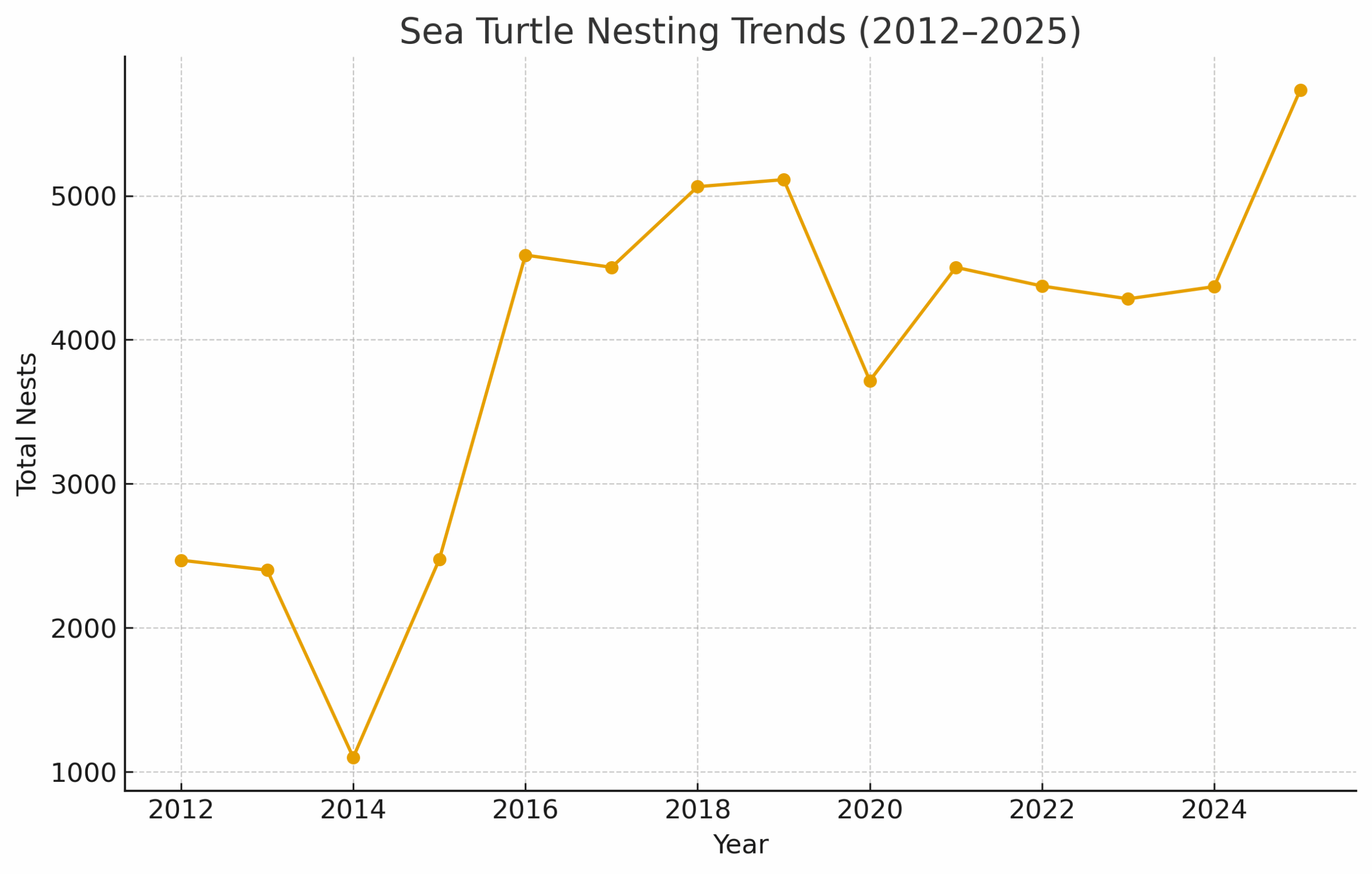
THE DATA: Sarasota’s Sea Turtle Boom in One Chart
Below is the first chart showing the explosion of nesting activity from 2011 through 2025 along the Longboat Key to Venice stretch (35 miles) monitored by the Mote Marine Laboratory.
2011: ~2,469 nests
2025: ~5,735 nests
That’s a 132 % increase in 14 years: a growth curve that looks less like a threatened species and more like a high-flying tech stock.
The polite term is “exponential growth.”
The less-polite version: “We’ve clearly succeeded. Now what?”
WHAT HAPPENS IF WE DON’T UPDATE POLICY?
Just math. No fear-mongering.
Assuming the “6.2% annual growth” trend continues, the projection through 2045 looks like this:
2025: 5,735 nests
2035: ~10,500 nests
2045: ~19,100 nests
If nothing changes, by 2045 the coast will resemble a giant caution-tape tableau. Hardly the luxury beachfront aesthetic people came here for.
THE HUMAN COST: Blackouts, Boarding-Up & Beach Mazes
Here’s what residents face under the current “more is always better” regime:
- Windows must be tinted or black-out curtains deployed nightly.
- Exterior lighting: off, shielded, dimmed, retested for compliance.
- Public beaches roped off like crime scenes.
- Tourists told: “Don’t use your flashlight.”
- Residents: “Can I walk the beach after dark? Nope.”
This isn’t “gentle environmental guidance.” It’s policy inertia from an era long since eclipsed by the numbers.
WHEN CONSERVATION OUTGROWS ITS HABITAT
Here’s the hard truth: over-recovery is a real ecological issue.
- In Bermuda, seagrass meadows collapsed due to overgrazing by booming green turtle populations.
- In the western Indian Ocean, overgrazing by turtles wiped out seagrass biomass and fish foundation species.
- In the U.S., white-tailed deer were saved from near extinction — now over 30 million strong, causing crop loss, deforestation and vehicle collisions.
- Canada geese: once endangered, now a domestic nuisance at airports and parks.
These examples are not “conservation gone wrong.” They’re conservation policy stuck on autopilot.
THE TURTLES THEMSELVES ARE TELLING US WE’RE DONE WITH CRISIS MODE
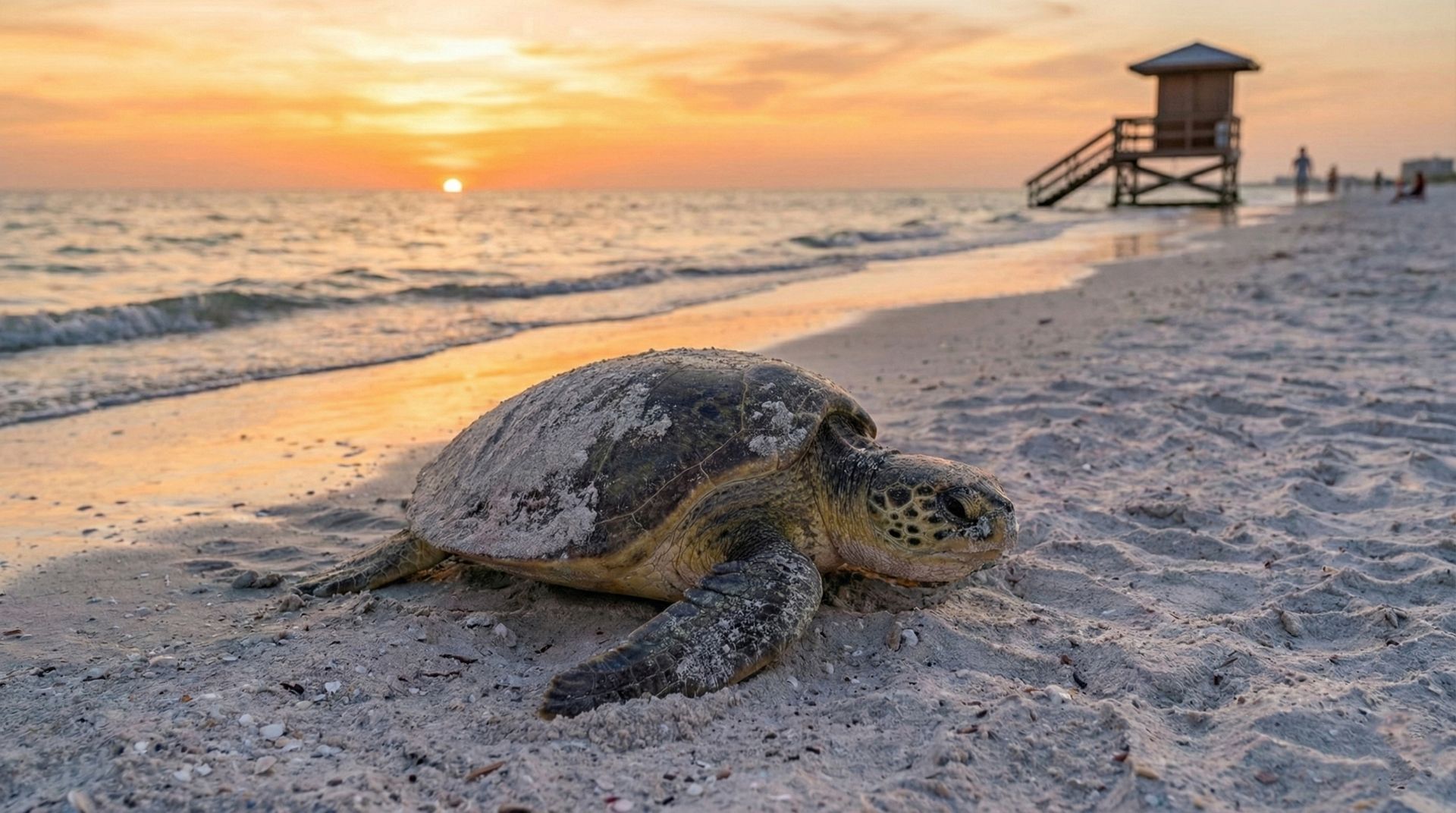
When nest counts quadruple, hatchling survival soars, and beaches fill with competing nests so dense that turtles dig into each other’s eggs, that’s not failure. That’s recovery.
Politely:
“We are now beyond the biological point where emergency measures were necessary.”
Less politely:
“We are running a baby-turtle factory and pretending the Gulf has infinite square footage.”
THE TONE PROBLEM: Why ANY critique sends people into orbit
Some environmental groups treat sea turtles like relics in a cathedral:
- Sacred
- Untouchable
- Above reason
- Above data
- Beyond questioning
The script goes: ‘If you don’t support unlimited expansion, you must want extinction.’
This policy position is intellectually weak, scientifically indefensible, yet deeply entrenched.
THE CASE FOR BALANCE, NOT BACKLASH
We can protect sea turtles and protect quality of life on the Sarasota barrier islands if we shift from:
- Emergency conservation
- Modern ecological management
That means:
- Maintaining reasonable protections
- Updating decades-old regulations
- Recognizing success and moving from expansion to sustainability
- Acknowledging humans also live here
- Giving local governments flexibility to adjust policies as conditions evolve
Science supports balance.
Residents do too.
The turtles appear to have never been better.
It’s time for policy to catch up with the 21st century.

By Janet and Steve Walter
Longboat Key Luxury Real Estate Specialists
Walter Group Real Estate | WalterGroupRealEstate.com